





China's 14th Five-Year Plan: Quiet Reforms, Tangible Results, and a Sharper Global Focus
As China approaches the final stretch of its 14th Five-Year Plan (2021–2025), policymakers are beginning to take stock of a period marked by structural shifts rather than headline-grabbing targets. Quiet resilience, pragmatic decarbonization, and measured steps toward market openness have characterized the past five years—offering a roadmap for how China intends to navigate an increasingly complex global economy.
Economic Resilience Beyond the Surface
Despite external shocks ranging from global supply chain disruptions to mounting geopolitical tensions, China has added over 35 trillion yuan (around USD 4.89 trillion) to its economy during the plan period—equivalent to contributing roughly 30% of global growth annually.
That growth, however, is underpinned not just by size but by a recalibration of the economic model. Final consumption has accounted for over half of GDP growth, and domestic demand has driven more than 86% of incremental output—reflecting Beijing's commitment to insulating the economy from volatile external conditions.
Meanwhile, innovation has taken center stage. China's R&D spending rose nearly 50% between 2020 and 2024, lifting its R&D-to-GDP ratio to 2.68%—now close to the average among OECD economies. These efforts hint at the longer-term goal of climbing the value chain and reducing reliance on imported technology.
Labor market stability remains a core concern. Despite pandemic-era headwinds, urban employment has remained robust, with more than 12 million jobs added annually. This resilience has helped underpin broader social stability—a top policy priority.
Green Transition Backed by Scale
China's decarbonization strategy has moved from pledges to implementation. Energy consumption per unit of GDP fell 11.6% between 2021 and 2024, while carbon emissions were cut by 1.1 billion tonnes—nearly half of the European Union's total emissions last year.
The country's renewable energy push has been equally striking. As of mid-2025, China's installed capacity of renewable power surpassed 2.09 billion kilowatts—more than double that of 2020. Today, roughly one-third of the nation's electricity comes from green sources.
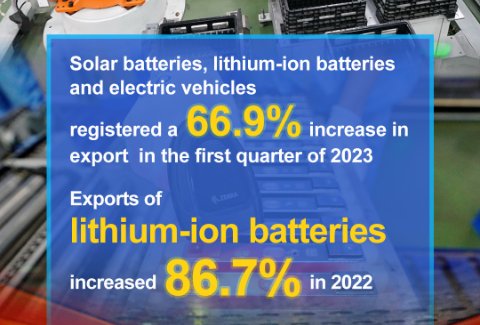
Consumer behavior is shifting as well. New energy vehicle (NEV) ownership jumped more than sixfold in four years, reaching 31.4 million by 2024. This signals not only government support but also the growing acceptance of green technologies by Chinese consumers.
Looking ahead, the next five-year plan will focus on hitting the 2030 carbon peak target. Officials say more granular and pragmatic tools will be introduced to integrate sustainability deeper into both industry and everyday life.
A More Disciplined Approach to Opening Up
While the rhetoric around opening up has remained consistent, the past five years have seen a more focused and rules-based approach to foreign investment. From 2021 to mid-2025, China attracted 4.7 trillion yuan in foreign direct investment, with foreign-invested firms now contributing significantly to industrial output, employment, and trade.
The regulatory framework has been gradually liberalized: the national negative list for foreign investment has been revised twice, and restrictions in sectors like manufacturing have been completely lifted. Reforms in services—including healthcare and telecommunications—have also created new footholds for international investors.
More importantly, foreign businesses are beginning to see stronger legal protections, especially in intellectual property enforcement, and a more predictable policy environment. Equal treatment in areas such as public procurement and standard-setting is increasingly emphasized in official statements.
A Platform, Not a Spotlight
Rather than making sweeping declarations, China's current strategy appears to favor incremental shifts that provide structural stability. The message to global investors is not one of sudden reform but of steady evolution: clearer rules, improved access, and deeper integration into global value chains—without compromising domestic priorities.
As China enters the next planning cycle, the focus will likely remain on consolidating these gains: upgrading industries, greening the economy, and selectively opening up sectors with global relevance. For businesses and policymakers abroad, this signals a China less driven by political slogans and more by pragmatic, long-term repositioning.






























First, please LoginComment After ~