





Rising Gears: How China's Industry Reinvents Growth and Trade
China's economy continues to evolve amid complex global conditions and domestic structural adjustments. In the first three quarters of 2025, the country's GDP grew by 5.2 percent year-on-year, outpacing most major economies and highlighting the resilience of its industrial system. This performance is not simply a continuation of past growth patterns, but reflects a strategic shift toward innovation-driven development and structural upgrading.
At the core of this transformation are new quality productive forces that drive advanced manufacturing and technology-led growth. Equipment and high-tech manufacturing posted value-added growth of 9.7 percent and 9.6 percent respectively, outpacing overall industrial output. Integrated circuit production surged 22.4 percent, while intelligent equipment manufacturing grew 12.2 percent, demonstrating the growing domestic capability in high-tech production and the adoption of AI and industrial internet solutions.
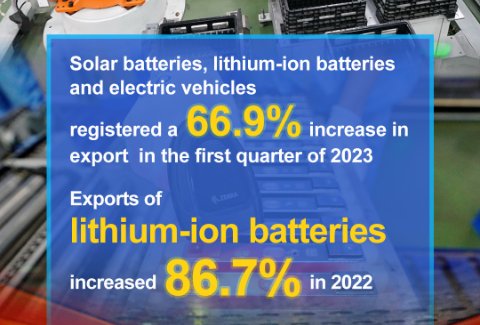
Green and smart transformation has also accelerated. New energy vehicle output jumped 29.7 percent, supported by a complete ecosystem from battery materials to intelligent charging. Industrial robot production increased 29.8 percent, reflecting the rapid adoption of automation to address labor constraints and improve efficiency. These sectors illustrate how innovation and structural upgrading are reshaping China’s industrial base.
Domestic demand remains a key stabilizer. Final consumption expenditure contributed over half of GDP growth, with service retail sales up 5.2 percent and robust activity in cultural and tourism markets during peak periods. Corporate profitability improved, with industrial enterprise profits rising 3.2 percent year-on-year, and September alone seeing a 21.6 percent increase, indicating healthier business fundamentals.
On the trade front, China’s export structure is undergoing significant upgrading. Total exports reached $2.8 trillion in the first three quarters, up 6.1 percent year-on-year, supported not by short-term front-loading for tariffs, but by structural diversification into multiple markets including ASEAN, the EU, Africa, and Latin America. Exports to the US, Russia, and South Korea declined, while growth in other regions offset these reductions, reflecting a deliberate shift toward broader, more resilient trade partnerships.
The composition of exports is also changing. Intermediate goods, including components and semi-finished products, grew 10.2 percent, while capital goods grew 6.9 percent, together driving most of the export growth. Consumer goods declined, indicating a transition toward higher-value segments. High-tech exports, such as autos, ships, and integrated circuits, posted double-digit growth, highlighting China’s competitive advantage in technology-intensive sectors.
These trends indicate a deliberate industrial strategy: upgrading domestic production capacity, fostering innovation, and diversifying export markets. By strengthening intermediate and capital goods production while pursuing technological advancement, Chinese firms are repositioning themselves in global supply chains, reducing dependency on any single market, and enabling long-term resilience.
In sum, China’s economic performance in 2025 illustrates a systemic shift from factor-driven to innovation-driven growth, from traditional manufacturing to high-value, technology-intensive production, and from concentrated export reliance to diversified global engagement. The ongoing structural upgrading of industry and trade not only stabilizes economic momentum but also positions China for sustainable integration into evolving global markets.
The analysis and projections presented here are for informational purposes and should be considered as a reference rather than investment advice.







































First, please LoginComment After ~