





Global Value Chains Are Being Rewired: Navigating the Era of Re-Globalization
This article contains AI assisted creative content
Global value chains (GVCs) are entering a transformative era, shaped by technology, climate imperatives, and geopolitical shifts. Far from retreating, globalization is being reconfigured, emphasizing resilience, sustainability, and digital integration, according to the Global Value Chain Development Report 2025 (WTO, ADB, WEF, UIBE).
Trade embedded in GVCs still represents roughly 46% of global trade, slightly below the 48% peak in 2022. Production networks are shifting from pure efficiency toward stability and adaptability. Core hubs in North America, the EU, and East Asia remain, while intermediary economies—Vietnam, Mexico, Poland, Turkiye—are emerging as vital connectors, supporting trade even across divergent political blocs.
Services and digitally deliverable solutions now account for over a third of value embedded in exports. Zhao Zhongxiu, president of UIBE, notes: “Modern competitiveness is driven more by services and digital functions than by physical assembly.”
TWO
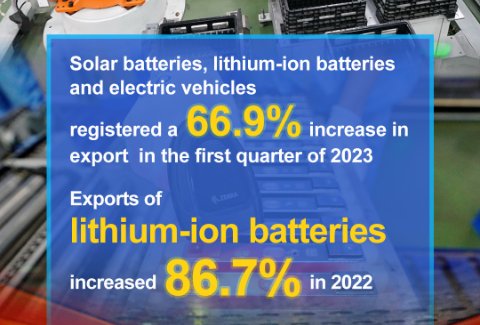
Environmental policies are reshaping GVCs. High-carbon production faces rising costs, driving investment in low-carbon manufacturing, renewable energy, and traceable supply chains. China's electric vehicle sector illustrates this: in 2023, the country produced nearly 77% of global EVs, leveraging vertical integration from battery production to assembly.
THREE
Policy increasingly drives trade flows. Over 180 sector-specific “Targeted Trade Deals” (2021–2024) focus on digital trade, critical minerals, and green technologies, reflecting pragmatic cooperation in an era where broad multilateral agreements are difficult. Firms must now consider regulatory stability alongside cost efficiency when designing supply chains.































First, please LoginComment After ~